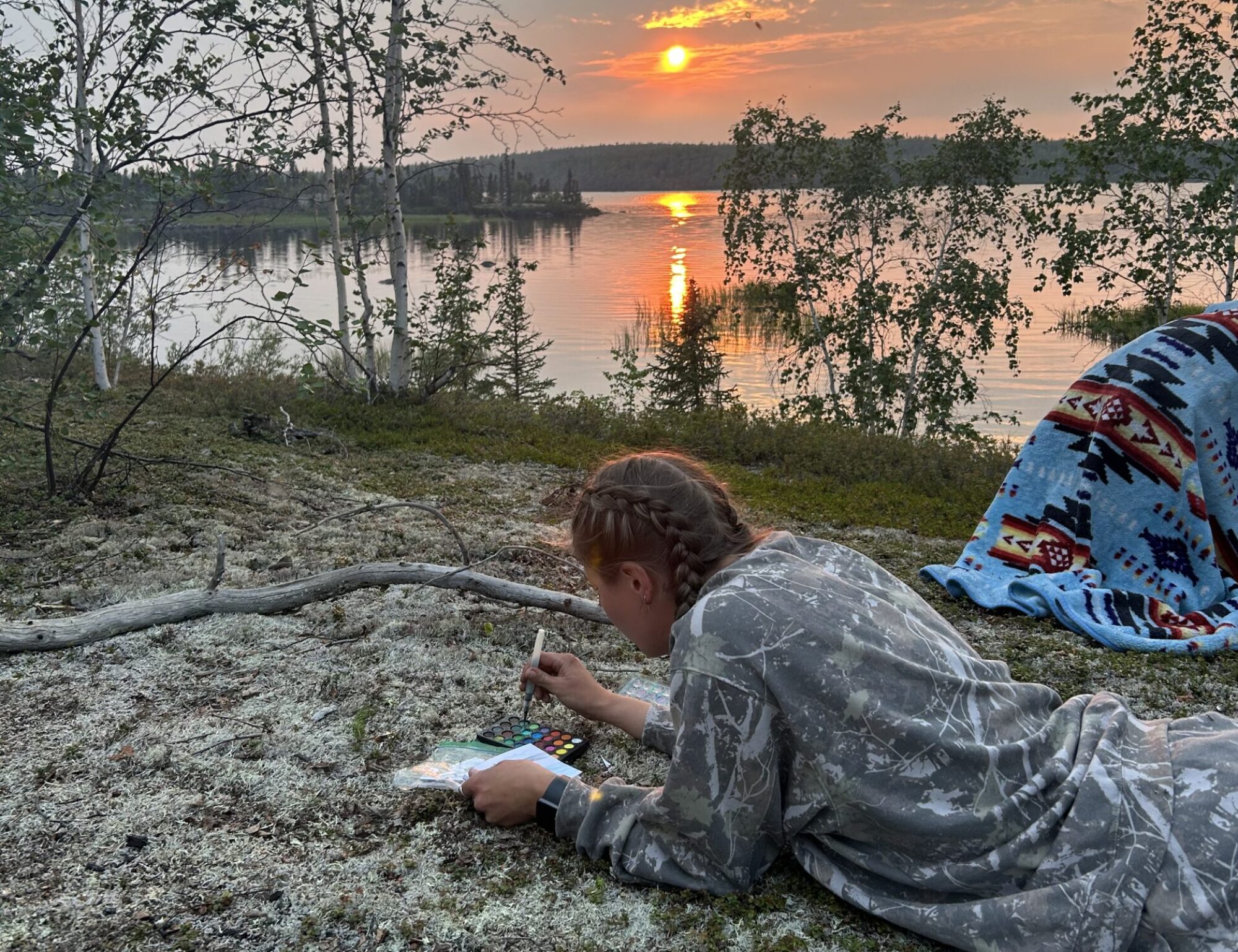

Philosophy Statement:
“If a child can’t learn the way we teach, maybe we should teach the way they learn.” — Estrada
My approach to teaching is grounded in flexibility, inclusivity, and the belief that every student learns differently. I see my role as an educator as one that requires responsiveness—meeting students where they are and supporting them in ways that help them feel capable and confident. Reflecting on my own experience as a quiet learner, I understand how important it is for educators to recognize that not all students show their understanding in the same way. Because of this, I aim to provide multiple ways for students to learn and express their thinking, including hands-on, visual, and collaborative approaches.
“Children have an absorbent mind…” — Montessori
“Every time we teach a child something…” — Piaget
I also believe that learning is deeply influenced by the environment. Students are constantly learning through their surroundings, which is why creating a calm, supportive, and engaging classroom space is essential. When students are given opportunities to explore, ask questions, and discover ideas for themselves, their learning becomes more meaningful and lasting. I aim to create an environment that encourages curiosity, independence, and a sense of safety where mistakes are seen as part of the learning process.
The Truth and Reconciliation Commission’s Call to Action 62 further shapes my philosophy by emphasizing the importance of teaching Indigenous histories and perspectives in age-appropriate and meaningful ways. As an Indigenous student, I recognize the impact of not learning this history earlier in my education. Moving forward, I am committed to integrating Indigenous perspectives throughout my teaching in ways that are respectful, honest, and connected to students’ identities and experiences.
Overall, my philosophy is centered on creating a learning environment that is inclusive, responsive, and rooted in relationships. I aim to support students not only academically, but as whole individuals, while fostering a sense of belonging, curiosity, and respect for others.
Indigenous Pedagogy Reflection:
According to James (2016), “The Capable Person” framework emphasizes that learning is a lifelong journey where students develop spiritually, emotionally, physically, and mentally. I was drawn to this idea because it focuses on the whole child rather than only academic achievement, which is often the main focus in Western education systems.
What stood out to me most was the importance of self-reliance and responsibility. Students are encouraged to take ownership of their learning and develop skills through experience, rather than relying solely on direct instruction. This approach allows students to build confidence and independence, which are important for both school and life beyond the classroom. The emphasis on relationships with self, others, the land, and the spiritual world also highlights the importance of connection, which I believe is essential for meaningful learning.
My hope for implementing this framework is to create a classroom environment where students feel capable, valued, and connected. I want to incorporate more hands-on and experiential learning opportunities so students can apply their knowledge in real-life contexts. I also hope to create space for reflection and personal growth, allowing students to see their progress over time. Overall, this framework supports a more inclusive and respectful approach to education that values multiple ways of knowing and being (FNESC, 2015).
References:
James, A. (2016). Dǝ gha nàzèe: The Tłı̨chǫ concept of a capable person (Master’s thesis, Simon Fraser University). https://summit.sfu.ca/item/16711
First Nations Education Steering Committee. (2015). First Peoples principles of learning. FNESC.
Early Years Study. (n.d.). A child is a capable person. https://earlyyearsstudy.ca
Foundations of My Philosophy
The following quotes reflect key ideas that shape my understanding of teaching and learning. They connect closely to my values around relationships, responsiveness, and supporting the whole child.
“Educating the mind without educating the heart is no education at all.”
— Aristotle
“A good teacher must be able to put himself in the place of those who find learning hard.”
— Eliphas Levi
“The goal of early childhood education should be to activate the child’s own natural desire to learn.”
— Maria Montessori
“Children have an absorbent mind. They absorb knowledge from the environment without fatigue.”
— Maria Montessori
“If a child can’t learn the way we teach, maybe we should teach the way they learn.”
— Ignacio Estrada
Connection to My Educational Philosophy
These quotes reflect my belief that education goes beyond academics and must also support the emotional, social, and cultural well-being of each child. I value building strong relationships with students and creating learning environments where they feel safe, supported, and understood. Like Aristotle’s quote suggests, educating the heart is just as important as educating the mind, and I strive to create spaces where students feel a sense of belonging.
I also believe that every child learns differently, and it is my role as an educator to be flexible and responsive in how I teach. The idea of meeting students where they are, and adapting to their needs, connects strongly to my experiences working with children in diverse settings. I have seen how meaningful it is when learning is shaped around the child, rather than expecting the child to fit into one way of teaching.
The Montessori quotes resonate with my belief in hands-on, experiential learning and the importance of environment. I believe that children are naturally curious and capable, and when they are provided with supportive, engaging spaces, they are able to explore, discover, and grow in meaningful ways.
Overall, these ideas connect to my commitment to relationship-based, culturally responsive, and place-based learning. As an Indigenous student and future educator, I aim to create learning environments that honour each child’s identity, experiences, and connection to community, while supporting their natural desire to learn and grow.
References
Aristotle. (n.d.)
Estrada, I. (n.d.)
Levi, E. (n.d.)
Montessori, M. (n.d.)
Environment As A Third Teacher:
“The environment should act as a living space that supports relationships, communication, and exploration.” — Loris Malaguzzi
The idea of the environment as the “third teacher,” rooted in the work of Loris Malaguzzi, highlights how important the learning space is in supporting children’s development. It recognizes that learning does not only come from the teacher or the curriculum, but also from the environment itself—through materials, experiences, and opportunities for exploration.
As an Indigenous student and future educator, this idea connects strongly to my understanding of place-based learning and the First Peoples Principles of Learning. Growing up in the North, I learned the importance of being on the land and learning through experience, observation, and connection. Learning was not always something that happened inside a classroom—it happened through doing, moving, and interacting with the world around me. Because of this, I value kinesthetic and hands-on learning, as it allows students to engage more deeply and meaningfully.
Using the environment as a third teacher supports all learners by creating opportunities for curiosity, creativity, and exploration. It allows students to learn in ways that are active and engaging, rather than passive. This approach benefits every student, but it can be especially meaningful for Indigenous learners, as it aligns with ways of learning that are rooted in relationships, movement, and connection to place.
Photo 1:
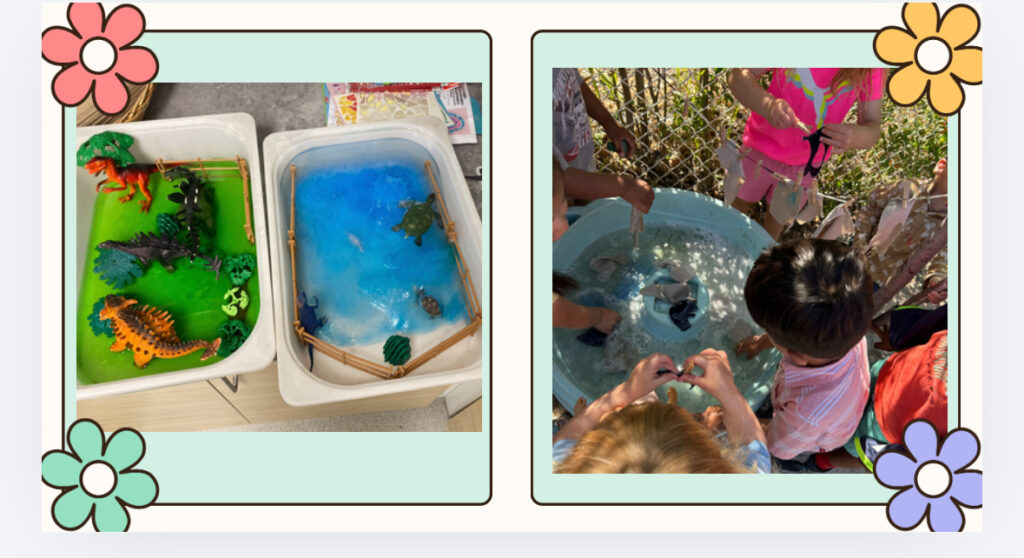
In this activity, students explored scrap materials by first colouring on clothing-shaped pieces. We then brought the activity outdoors, where students used natural materials to “clean” their pieces and hang them to dry. This experience allowed students to engage in hands-on, movement-based learning while interacting with the environment in a meaningful way.
Photo 2:
In this activity, I created a sensory bin using frozen water and Jell-O. Students were able to explore texture, temperature, and change through a hands-on, sensory experience. This encouraged curiosity, creativity, and learning through play.
Overall, I believe the environment plays a powerful role in supporting learning. By creating opportunities for students to explore, move, and connect with their surroundings, I aim to support meaningful, engaging, and culturally responsive learning experiences for all students.
References
Malaguzzi, L. (n.d.)